A Morning-After Concert Memory Ritual
A morning-after concert memory ritual helps you preserve a personal detail from last night, keep it easy to find, and avoid turning the show into homework.
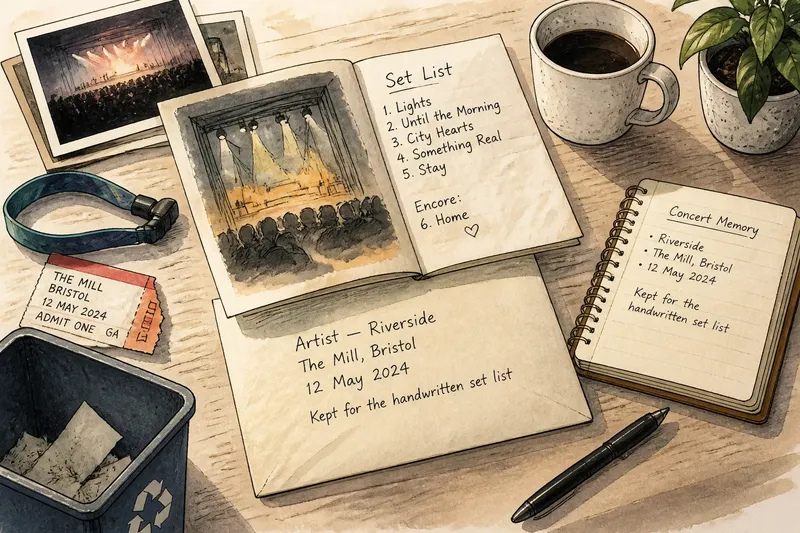
Your coffee is cooling beside a ticket stub, and the encore is already slipping into a blur. A morning-after concert memory ritual can help you decide what deserves a place in your personal record—not by reconstructing the whole show, but by choosing one detail you want to keep and giving it a useful home.
Choose one thing to carry forward
Instead of writing a mini-review, ask what you would be sorry to lose from the night. It could be a ticket with a handwritten set time, a note about the person who brought you, or the name of the venue where you first heard a favorite performer. This ritual is about selecting a keepsake, not rating the music or cataloguing every impression.
Pick a form that suits the detail. Keep a paper item if its texture or design matters to you. If the memory is a sentence, add it to a dated note. If it depends on a sound you can lawfully record or retain, save the short recording only when venue rules and the rights holder allow it.
What is not worth the effort is keeping every scrap “just in case” or building an elaborate filing system before you know what you want to revisit. A single well-chosen item is easier to care for than a pile with no clear purpose.
Decide whether the memory needs an object or a note
Look at what you already have: a printed programme, ticket, wristband, photograph, or a few words in your phone. Ask whether the physical object adds something the note cannot. If the programme has an unusual design or a meaningful inscription, preserve it. If it is an ordinary handout and the useful detail is the artist’s name, a note may be enough.
For a paper keepsake, let it dry if it is damp, then store it flat in a clean envelope or folder away from direct sunlight and moisture. Avoid tape, glue, or lamination; they can damage paper or make later handling difficult. Write the date and venue on the envelope rather than on the item itself.
For a digital note, use a title that will make sense later, such as “Artist — venue — date.” Add a brief line explaining why you kept the item. Keep any original photo or audio file in its existing location when possible, and note where it lives rather than making several confusing copies.
Use a simple selection check
Before saving something, make a quick decision using these checks. Each one connects an observable detail to a practical next action.
- Check whether the item is yours to keep. If it is your ticket or programme, keep it or record its details; if it belongs to the venue or another person, ask permission or leave it where it is.
- Check whether the item has a personal detail you can name. If you can name one, keep the item or write that detail down; if you cannot, let the item go rather than saving it by default.
- Check for moisture, dirt, or loose fragments. If the paper is damp, let it air-dry before storing it; if it is clean and dry, place it flat in an envelope or folder.
- Check whether a digital file includes other people or private information. If it does, crop, remove, or avoid sharing it; if it does not, save it in your usual photo or document location.
- Check whether the recording or image was allowed. If venue rules or rights are unclear, do not post or distribute it; keep a written memory instead.
- Check whether you can find the item again. If its title lacks the artist, venue, or date you need, add the missing detail; if the title is already clear, avoid adding unnecessary tags.
Turn one choice into a complete record
Say you come home with a folded programme, a ticket stub, and a phone photo of the stage. The programme has the set list handwritten on its back, the ticket has no detail you care about, and the photo includes strangers in the foreground. You decide to keep the programme flat in a dated envelope, note the artist and venue on the envelope, recycle the ticket, and leave the photo private rather than posting it. The result is one findable keepsake and a clear decision about the image, without turning the morning into a sorting project.
When you make your own record, include just enough context to identify it: performer, venue, date if known, and why you chose it. Mark uncertain details as uncertain. A short note such as “Kept for the handwritten set list; date from ticket” is more useful than filling gaps with guesses.
How should you store or share the keepsake?
Should I keep the whole programme?
Keep it if its contents or design matter to you, and store it flat in a clean folder or envelope. If only one detail matters, write that detail in your record and let the rest go.
Can I post a concert photo or recording?
Check venue rules, permissions, and the rights attached to the material before sharing. If you are unsure, keep a private written note instead of posting the file.
What should I do if I do not know the concert date?
Use the information you can verify, such as the venue or a date printed on the ticket, and mark anything uncertain. Do not invent a date to make the record look complete.
Where should I keep a digital concert memory?
Use a notes app or folder you already search, with a clear title containing the performer and venue. Add a date when you know it, and avoid duplicate copies unless you have a specific reason to make one.
Make the memory easy to return to
Once you have chosen the keepsake, add a plain label or note and put it where you would naturally look for it. For a paper item, that may be a folder with other programmes; for a digital record, it may be a dated note beside your other personal records. The morning-after concert memory ritual works best when it ends with a small, finished choice.
Later, you can decide whether the item still matters or belongs in a different place. Keep the record honest about what you know, protect other people’s privacy, and choose the simplest form that preserves the detail you meant to carry forward.