Programme, Ticket or Photograph: Choose One Concert Keepsake to Keep
Choose one concert keepsake by matching a programme, ticket or photograph to the memory you most want to preserve, then store it with a simple routine.
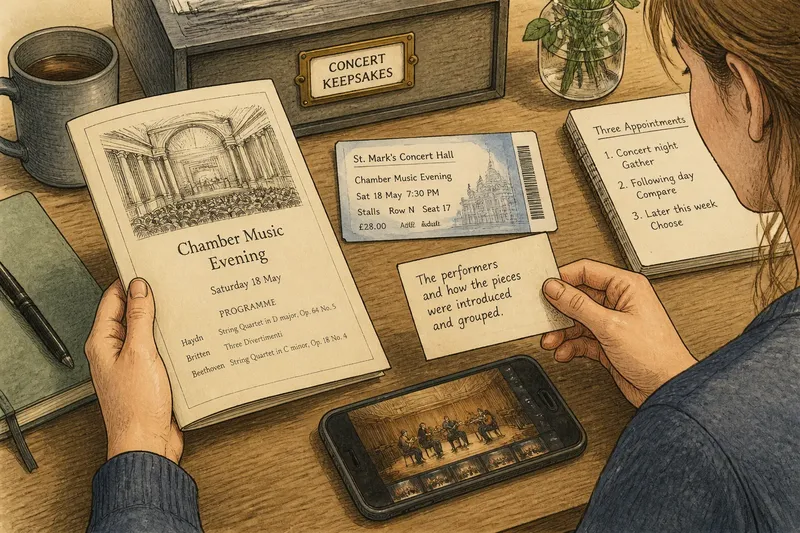
You empty your coat after a concert and find a ticket beside a folded programme; your phone holds several stage photos. To choose one concert keepsake, start with the memory you want the object to bring back: the evening’s details, your presence there, or a scene you saw.
Give the choice three clearly timed appointments: the night of the concert, the following day, and one chosen day later that week. At each appointment, take one small action. You will have time to compare the objects without turning the decision into a growing collection project.
Name the memory you want to keep
Finish this sentence: “When I look at this later, I want to remember…” Keep the answer specific. “The concert” is broad; “how the pieces were grouped” or “the hall glowing during the encore” gives you a useful way to compare items.
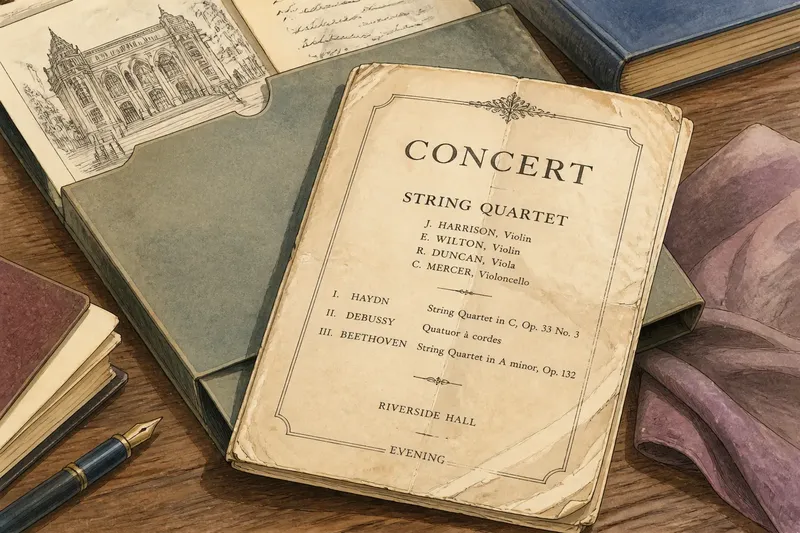
A programme may preserve the event’s printed context: performers, works, running order and venue details. A ticket can serve as a compact token of attendance. A photograph can bring back a visible scene, such as the stage, a companion or the room before the music began.
These are possibilities, not rules. A programme may matter because a friend gave it to you. A ticket may carry a handwritten note. A photograph may show little more than an empty stage. Judge the item you have, rather than what that kind of object is supposed to mean.
Use three appointments with clear actions
The concert night is for gathering
Put paper items together in a clean, dry place, such as a desk drawer or folder. Keep a programme flat, away from drinks and damp clothing. If you took photos, mark likely choices as favorites or put them in a temporary phone album.
Write a brief prompt in your phone or on scrap paper: the venue, who went with you, and one detail you noticed. This note is only there to help you compare the objects later.
The following day is for comparing
Set the programme and ticket beside each other, then view your candidate photos. Ask what each item brings back. Does the programme restore the order of the event? Does the ticket feel personal? Does a photo call up a scene that the paper items cannot?
Check what each object actually contains. A programme with performers’ names and a running order may suit a memory about context; a cover without useful details may not. A ticket with the venue and event name may identify the night, while a generic ticket may need your note. Choose a photo only if its visible content matters to you and you have the right to keep it.
One later day that week is for choosing
Pick a day before the week ends and read your prompt again. Choose the item that best matches your opening sentence, then put it in its intended home. Store paper flat in a labeled envelope or folder, away from sunlight and moisture. For a photo, use a clear album name or a short caption with the event and companion.
Let unchosen items go if they have no separate purpose. Recycle paper where appropriate and delete duplicate photos if you are comfortable doing so. If you still cannot choose, put the extra item in a temporary holding spot and set a specific date to revisit it. A reminder is more useful than an indefinite pile.
Check each keepsake before you decide
Use these checks when two items seem equally appealing. Each observation points to a practical choice, with another option if the first does not fit.
- Programme details: Check whether it lists names, works or sequence; if those details support the memory you want, keep the programme, otherwise compare the ticket or a photo.
- Ticket information: Check whether the ticket identifies the venue or event; if it does and the token feels personal, keep it, otherwise add a brief identifying note to another item.
- Photo content: Check whether the image shows a scene you want to revisit; if it does, choose that photo, otherwise skip it and consider a paper keepsake.
- Personal connection: Check whether an item carries a note, a gift from a companion or another specific association; if it does, favor it, otherwise choose by the memory each item brings back.
- Storage preference: Check whether you can comfortably keep paper flat or prefer a digital item; if paper storage suits you, use a folder, otherwise save one clearly named image.
- Privacy: Check whether a photo includes other people or private details; if you are unsure about sharing it, keep it private or choose a different keepsake.
It is not worth annotating every song, saving every screenshot or writing a full account just to make a keepsake feel complete. Add only enough context to recognize the item later.
Which concert keepsake fits your memory?
Should I keep the programme or the ticket?
Choose the programme if its contents help you recall the performers or event order. Choose the ticket if its personal feel or printed details matter more to you.
Is a concert photograph better than paper?
A photograph fits best if a particular visible scene is what you want to revisit. Paper may suit you better if you value printed context or prefer an object you can hold without opening a screen.
What if no item feels important?
You do not need a keepsake from every concert. If none of the objects connects with a memory you want to revisit, let them go and keep the short note only if it remains useful.
Can I keep a digital ticket instead of the original?
Yes, if the saved copy contains the details you want and you can access it later. Put it in a clearly named folder, and avoid keeping personal information you do not need.
Add just enough context to recognize it
Give the object a short identifier: the event name, venue, companion or a phrase tied to your memory. A note on a separate slip beside a programme or ticket can add context without marking the original.
For a photo, use a caption that says what is visible or why you chose it. “The hall before the performance” is more useful than “great night.” If the image is unmistakable to you, the event name may be enough.
Imagine you leave a chamber concert with a ticket, a detailed programme and several phone photos. Your starting note says you want to remember how performers were introduced and how the pieces were grouped. The next day, you see that the programme lists the names and sequence, while the photos show only the stage. On the later appointment, you choose the programme, write the venue and your companion’s name on a separate slip, and store both flat in a labeled folder. The result preserves the context you wanted, while the ticket and duplicate photos can go.
Your own answer may differ. If a friend’s face in one photo brings the evening back more clearly than the printed details, choose the photo. If the ticket feels like the most personal reminder, keep it. A concert keepsake earns its place by connecting to the memory you named; the identifying note and a remembered storage spot help you find it again.