The Detail That Brings a Concert Back
A concert memory can start with one precise detail. Learn how to notice, record, and use a sound, gesture, or room detail without retelling the show.
You leave a concert with your ears still full of sound, but the moment that returns later may be a singer leaning toward the microphone or the hush before an encore. A vivid concert memory often begins with one detail, not a full account of the performance.
What makes one concert detail memorable?
A memorable detail connects the performance to a specific moment in the room. It might be the rasp of a bow change, the red glow on a drummer’s hands, a cool draft at your seat, or the crowd’s sudden stillness. Its value comes from how clearly you can picture or sense it later, not from how grand it sounds.
Look for a detail with an edge: a small contrast, change, or surprise. The room was loud, then one voice seemed close. A familiar song sounded fragile rather than triumphant. A stage light caught dust as the audience settled. These differences give your recollection something to hold onto.
Choose what genuinely caught your attention. The most technically impressive passage may not be the moment that stayed with you. A detail that mattered to you is more useful than one you think a review ought to mention.
How do I notice a detail without missing the music?
Let attention follow the performance, then notice what draws it briefly. You do not need to scan the room or take notes during a song. A natural pause between pieces, a change in lighting, or the transition into an encore can offer a moment to register what you remember.
Try a quiet mental prompt: What changed just now? What did I notice before I knew I was noticing it? The answer may be a singer’s breath before a high note, the scrape of a chair, or the way a melody seemed to travel across the hall. Then return to listening.
It is not worth the effort to force a detail into every song or keep checking a phone for a perfect note. That turns attention into a task and can make the concert feel like material to collect. If a moment matters, let it land first.
Should I record the detail during the concert or afterward?
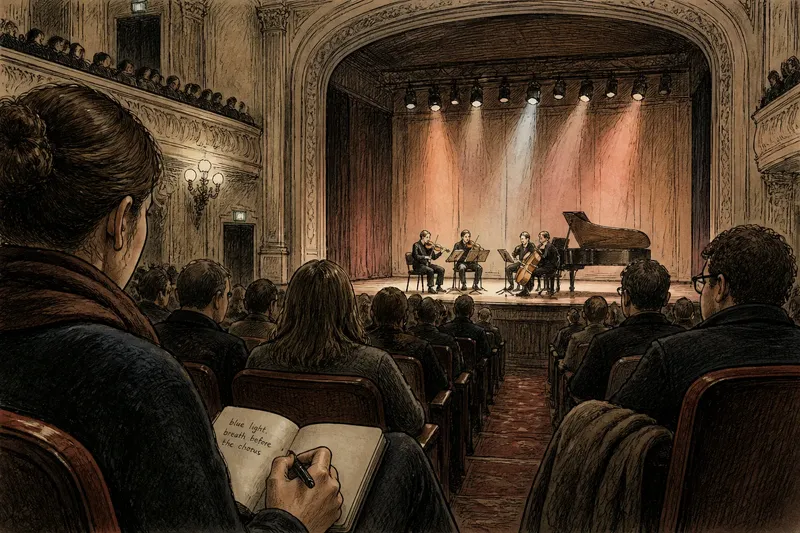
Record it afterward unless a brief note is easy and welcome in the setting. A few words can preserve a detail without interrupting your listening: “blue light, breath before the chorus” is enough to prompt a fuller recollection later.
If you use a phone, keep the screen dim and write only a fragment during a pause. A paper notebook works too, especially if you already carry one. Avoid trying to describe the whole sequence while it is happening; you are more likely to miss what you came to hear.
As you leave, say the detail aloud or add a short note to a private concert journal. Include a simple cue such as the venue or performer if you keep memories from many shows. The cue helps you place the moment without turning the note into a set list.
How do I turn one detail into a personal recollection?
Start with the sensory fact, then add the situation that made it matter. Keep the account close to what you remember: what you heard, saw, felt, or noticed in the room. A short recollection can be vivid without claiming to represent the entire performance.
Say you remember a violinist lowering the instrument during a quiet passage. You might write that the bow stopped, the room seemed to hold still, and you noticed your neighbor’s sleeve brush the seat beside you. Those details place the pause in a particular moment; they do not need to explain what every other listener felt.
Use uncertainty honestly. If you cannot recall whether the light was amber or red, say that the stage looked warm rather than choosing a color to make the scene sound sharper. A memory can remain personal and meaningful without pretending to be a recording.
What should I do if the detail feels too small?
Keep it if it brings the moment back to you. A tiny sound or gesture can carry more personal meaning than a sweeping description because it links the music to your place in the room. You do not have to justify the detail to an imagined audience.
Give it one sentence of context: where you were, what was happening around it, or what changed in the music. If the context does not come back, leave it out. A bare fragment can still serve as a prompt for your own memory.
How can I keep the memory without turning it into a review?
Write from your own point of view and resist judging the whole concert. Describe the moment that reached you rather than ranking the performance or explaining what the artist intended. This keeps the note focused on your encounter with the music.
A useful pattern is detail, setting, response. Name the specific cue, place it in the scene, and say what you noticed in yourself. Keep each part brief. If the note starts to list every song or assess the entire show, return to the detail that first brought the concert back.
You can keep a concert memory in a journal, a note on your phone, or a dated entry in a personal archive. Use whichever format you will actually revisit. The aim is not to preserve every fact; it is to leave yourself a clear doorway into the moment.
Which details are easiest to remember later?
Details linked to a change or a physical sensation often make useful anchors. Listen for a sudden quiet, a rough edge in a voice, the room’s echo after a final chord, or the crowd shifting as the musicians return. Notice visual cues such as a hand lifted before the downbeat, but choose only what you truly saw.
Situational details can work just as well: a view partly blocked by a balcony rail, a draft near the aisle, or the way the audience waited before applauding. These are not substitutes for the music. They are the conditions under which you heard it.
For a concert memory, one concrete detail can be enough to reopen a larger experience. Write down the cue that feels most alive, add only the context you can recall, and let the rest remain unrecorded. That restraint leaves room for the memory to be yours rather than a report of everything that happened.